

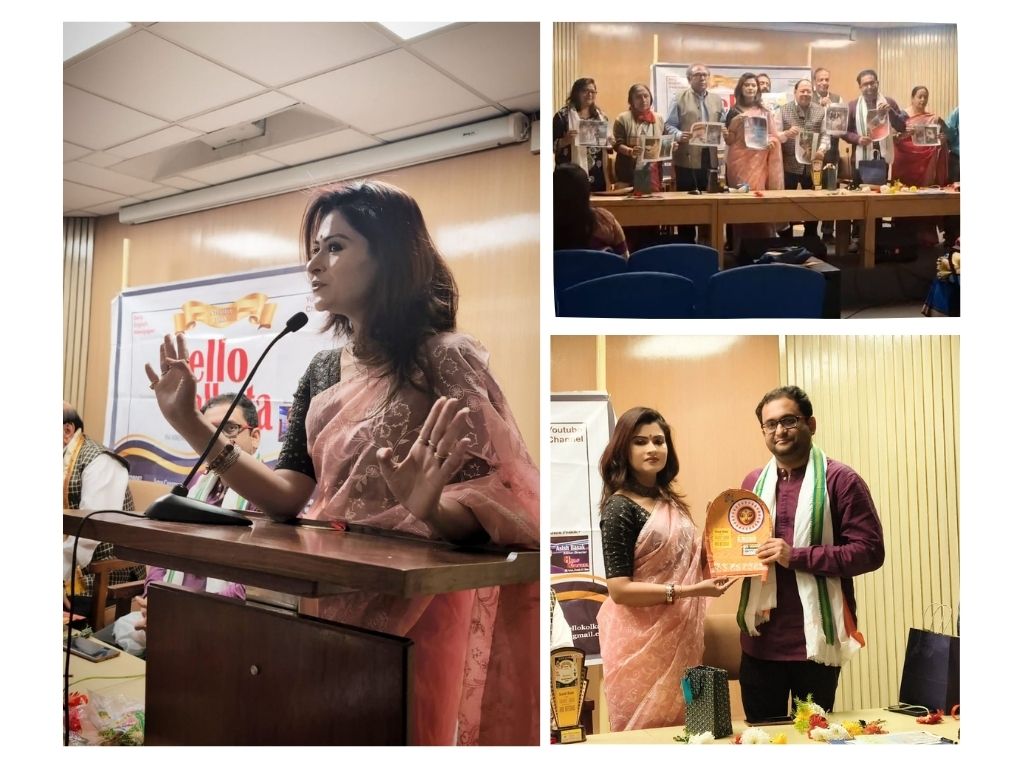
Saraswati Bhandar once again brought the silent suffering of animals into public conscience through a thought-provoking discussion titled “Obola – The Unexpressed Silent Cries of Animals.” The programme questioned a deeply uncomfortable truth: while humans often claim to speak on behalf of animals, do they truly try to understand the physical pain and emotional distress these voiceless beings endure?
Known for its sustained work on humane and inclusive social issues, Saraswati Bhandar has earlier taken several unconventional initiatives—publishing books at the Kolkata Book Fair with a pet dog despite resistance, organizing a Pet Friendly Fair inside the Belgachia Animal Hospital, and observing cultural rituals like Bhai Phonta and Shasthi for street animals and birds to build public awareness.
As part of this ongoing journey, a discussion meeting was held on 2 February at Abanindra Sabhaghar. The event brought together individuals who actively work for the welfare of street animals and birds and who protest against cruelty towards voiceless lives. The speakers included noted poet, writer and journalist Syed Hasmat Jalal, singer Shubhayu Banerjee, Mahua Dutta, and Sri Ratan Jhawar, among others.
The session was anchored by Jharna Bhattacharya, founder of Saraswati Bhandar. In her address, she emphasized that Saraswati Bhandar stands against all forms of violence—especially linguistic and emotional oppression—and uses words as a form of resistance wherever the human spirit bleeds. “Our protest will continue, whether the victim is vocal or voiceless. Being humane is not a weakness; it is our responsibility as human beings,” she remarked.
Drawing attention to social contradictions, she pointed out how large cultural festivals like book fairs celebrate knowledge and education, yet often ignore their impact on animals. Pets are left alone at home in fear because entry is prohibited, while countless street animals suffer from excessive noise and air pollution. “If such festivals truly revolve around books and knowledge, their reflection must reach every corner of society. Only then can knowledge expand compassion and reduce narrow-mindedness,” she concluded.
The programme ended with a powerful reminder that empathy must not stop at human boundaries, and that true cultural progress lies in standing up for those who cannot speak for themselves.